

A summary of presentations from the weekly Summit partner webinars
February 12, 2026 – The latest Summit Summary
- Vaccine Patient Advocacy – Karin Hoelzer, DVM, PhD, and Emily Acker, MPH, of the Biotechnology Innovation Organization (BIO), and Karen Ernst, Arthur Lavin, MD, and Michele Slafkosky
- Announcements
Vaccine Patient Advocacy – Karin Hoelzer, DVM, PhD, and Emily Acker, MPH, of the Biotechnology Innovation Organization (BIO), and Karen Ernst, Arthur Lavin, MD, and Michele Slafkosky
Karin Hoelzer, DVM, PhD, and Emily Acker, MPH, of the Biotechnology Innovation Organization (BIO), described their work with the patient community on innovation and access to vaccines. Karen Ernst, Arthur Lavin, MD, and Michele Slafkosky, discussed their patient advocacy organizations’ efforts to amplify the voices of patients, families, and communities in support of vaccination.
Building Partnerships with Patient Groups – Karin Hoelzer, DVM, PhD, Senior Director, Patient Advocacy, and Emily Acker, MPH, Senior Director, Infectious Disease Policy, BIO
Patient groups are increasingly recognizing the power of coalitions. They are also being asked to do more with less, highlighting the need to focus their efforts. They play a key role in informing policy proposals. BIO focuses on effective alignment with patient groups and seeks to provide resources and connections.
- Patients with chronic disease are concerned about potential limits on vaccine access.
- BIO has helped build a coalition of patient groups that meets regularly to share expertise and resources to assist groups in tackling the daunting issues around policymaking.
- BIO is working with patient groups to address state-level anti-vaccine legislation, leveraging the power of bringing together different voices and perspectives.
- Recent state legislation has targeted vaccines on numerous fronts:
- School entry requirements
- Changes to Advisory Committee on Immunization Practices (ACIP) recommendations
- Challenges to ingredients and vaccine formulations
- Challenges to mRNA and other innovative technologies
- Challenges based on informed consent
- Vaccine labeling
- Liability and attacks on the Vaccine Injury Compensation Program (VICP)
- Provider liability
- Most legislation targets childhood vaccines but would have consequences across the lifespan.
BIO provides various resources:
- Short branded and nonbranded talking points that advocates can use and give to legislators on topics such as how vaccines are made, how injury compensation programs work, understanding mRNA technology, understanding the value of disease prevention, and others (see BIO Toolkit for Advocates)
- Monthly webinar series that highlights policy issues and the patient groups that have been influential in those policies
- “BIO Guiding Principles for Interacting with Patient Advocacy Organizations”
Focus on Families and Communities – Karen Ernst, Program Director, Voices for Vaccines (VFV)
VFV avoids the term “patient advocate” in favor of a sharp focus on families and communities.
- Building trust in the community is key to building trust in vaccines.
- VFV’s approach seeks to equip families with the tools to make decisions, elevate their voices, and build from the family outward to communities and systems.
- Credible information is disseminated through personal stories via advocates who receive formal training in five topics:
- How to talk about vaccines: specifically focused on communicating with vaccine-hesitant people using a standard method for respectful conversations
- Storytelling for social change (register for the next session: February 25, 4 pm EST)
- Media and messaging: how to be a spokesperson for your community and how to contact local media
- Resilience for advocates: tips on self-care to help people stay engaged without burning out
- From volunteer to leader: how to lead decision-making around community needs (register for the next session: March 11, noon EST)
Training sessions are open to all. See VoicesForVaccines.org for details and additional resources. The organization’s messaging uses plain language that spotlights practical concerns, such as what changes to the ACIP vaccine schedule mean for individual access and insurance coverage. Its weekly Just the Facts newsletter debunks misinformation and is being translated into YouTube videos that model effective communication.
Shifting the Conversation – Arthur Lavin, MD, Founder and President, Grandparents for Vaccines
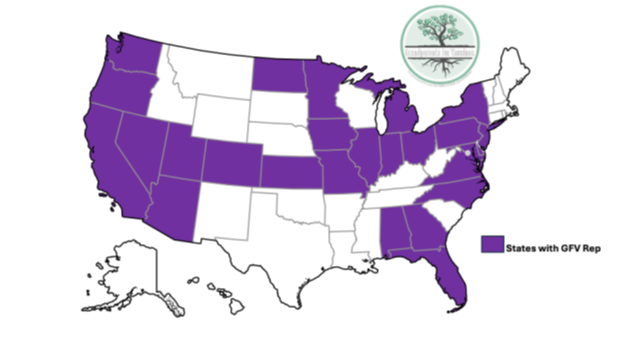
Launched in September 2025, Grandparents for Vaccines seeks to turn attention back to protecting children by encouraging individuals to share their personal experiences with diseases such as polio, measles, and meningitis from the days before effective vaccines to prevent those diseases were available.
- Grandparents are motivated to protect their grandchildren.
- Even in counties with low vaccine uptake, the majority of people support childhood vaccination and are frustrated by anti-vaccine voices dominating the conversation.
- Already, more than half of US states already have at least one Grandparents for Vaccines volunteer who is responsible for getting local media attention, including social media.
- National media outlets, including the Rachel Maddow Show and Forbes magazine, have featured Grandparents for Vaccines representatives.
- Grandparents for Vaccines is joining with other organizations to build a coalition; it has secured long-term funding and hired an executive director: Kim Boller, PhD.
- Future outreach efforts will target farmers’ markets, parent-teacher organizations, houses of worship, and public health departments, among other community gatherings.
- Visit GrandparentsForVaccines.com for resources.
Families Fighting Flu: Patient Advocacy and Stories – Michele Slafkosky, Executive Director, Families Fighting Flu
The climate is changing, and it is more important than ever to amplify personal stories.
- Connecting with the audience is critical.
- The right advocate with the right story for the audience matters.
- Consider who the audience is, what is most important to that audience, and which advocate or story will resonate with that audience.
Advocates build confidence and skills at the local level, then graduate to a larger stage.
- Families Fighting Flu worked with a 7-year-old to communicate his story through a comic book, which led to speaking opportunities. Now 10 years old, this young advocate recently spoke to policymakers in Mississippi.
- A family member who lost her daughter joined Families Fighting Flu, became a board member, and is now advocating at the state and national level.
Families Fighting Flu amplifies the voices of advocates.
- Families Fighting Flu partnered with social media influencers who have since become advocates for vaccination.
- National news outlets such as USA Today and US News and World Report have featured patient stories.
- Media outlets are increasingly running op-eds written by people affected by flu.
- Families Fighting Flu’s media efforts have reached 300 million people, adding another 30 million or more since January 5 alone.
There are many stories to tell.
- The Global Healthy Living Foundation and the Adult Vaccine Access Coalition report, “Influenza’s Economic Burden and the Impact of Adult Vaccination,” determined that the 2023-24 flu season cost $29 billion in health care expenses and lost worker productivity (under peer review; preprint available).
- The worst-case scenario is not the only way to tell the story; severe cases that cause disability or economic hardship, or both, are also important to highlight.
- Moderate impacts, such as missing work or school, also resonate with audiences.
Summit partners should consider all the resources available from patient and family advocacy groups as well as which advocates’ stories are likely to resonate with their own target communities.
QUESTIONS & ANSWERS
Q: What messages are your advocates using with legislators or families that seem to be resonating?
Arthur Lavin (Grandparents for Vaccines): Listening to Karen from VFV and Michele from Families Fighting Flu, I hope people picked up on a word that kept popping up across all our organizations: “stories.” People see the world through the stories in their mind. When the parents [are] thinking about giving their child a vaccine, it’s the story in their head[s] that determines what they’ll do. There was a story in that person’s head in the animation that Karen showed that was so excellent. And so, we call ourselves a storytelling movement to protect every child’s tomorrow. That’s our tagline. And the North Star we use in our narrative is the word “grandparents,” because even in this day and age, there are very few people who distrust the love of a grandparent for a grandchild. The cynicism hasn’t eroded that value yet, so we’re using that value. [We also emphasize that] vaccines are a great public health triumph. We’re using the word “storytelling” a lot, as our colleagues in these other movements are as well, because it’s human, it’s relational and accessible. The fourth theme that we’re sounding is to protect every child. A grandparent’s call to protect every child is universal, it’s moral, and it’s nonpartisan. And lastly, in terms of the messages that we’re getting out there, we’re future-focused. We’re hopeful and responsible. So we’re looking ahead. That’s how we’re constructing most of our messages, and that’s what’s getting, I think, most of the response.
I will tell one story. We’ve been very moved by the Foundation for Healthy North Dakota, which does a lot of work focused on people who are skeptical about public health and science. They tell me that in North Dakota, across the state, if you’re in a room where there’s a conference or meeting going on and you start talking about the word “vaccines,” people actually get up and leave the room. And they said, “Hey, before you go, do you want to hear about Grandparents for Vaccines?” And they say, “What’s that?” So, these were people [who] were pretty hostile to the idea of vaccines, and I think that the word that brings them back in the room is “grandparents.” So, if you ask what our message is that takes hold, I’d say the main thing is that people are responding to the idea that grandma and grandpa have something to say.
Q: Do any of the other organizations want to contribute about messages that seem to be resonating now and what is different from the past?
Karen Ernst (VFV): Yes, I’ve been around for a little while now. And for us, one of the things that we’re really putting out into the community is our Ask for Vax campaign. So it’s #AskForVax, and what we’re trying to do is get people to be proactive about vaccination, to ask their providers, their pharmacists, and really trying to maximize their vaccination and help to empower them by asking, “What vaccines can I get today?” It’s a different way of framing it for them, and it puts a little bit more of the onus on them, but I think it’s really important for them to feel like they have some power in these conversations right now, And as far as the schedule and all that stuff, we just make it simple: “What vaccines can I get today?” If you go to Instagram and search for #AskForVax, you’ll see some of the influencers that we’ve worked with putting forth that campaign.
Karin Hoelzer (BIO): And from BIO’s side, understanding that the patient groups and the communities that we work with are a little bit different in that they have a lot more underlying risk factors that really make vaccine-preventable diseases so much more likely to have terrible outcomes for these patient populations. And so [we are] really telling that story, talking about what it means for a family that has a loved one with a primary immune deficiency if there are no school mandates. What it means [is] that the family may not feel comfortable sending their kid to school anymore. Talking about cancer patients that have battled and survived cancer, but they’re still immunocompromised. One of our amazing advocates tells the story of how she has battled cancer twice, but the worst experience of her life was getting the flu on top of having chronic health challenges. And those are the stories that I think really bring together the power of innovation, the power of curing cancer and really extending life. And then, the detrimental impacts of not having vaccine coverage. We’ve seen these stories being really powerful and bringing new perspectives to a lot of the conversations.
Q: How can summit members get in touch with your organizations, and what can they do to help amplify these important messages?
Michele Slafkosky (Families Fighting Flu): I just think Families Fighting Flu wants to share our stories, so if you’re in a particular location, region, state, area, and you want us to help amplify your message around vaccines, we have a campaign called Vaccinate, Test, Treat. That way we can focus on flu specifically, but that allows us the opportunity to work with others to support the fact that the best prevention is to vaccinate. And something you mentioned, Karen from BIO, is that story. We are in such a climate that people don’t take the symptoms seriously. And in respiratory [disease] season, there are so many overlapping symptoms, so we’re really trying to amplify the message that if you’re not going to get vaccinated, at least take the symptoms seriously. Go get tested for an appropriate treatment, and if they test positive for flu, RSV [respiratory syncytial virus], pneumonia, any of these other illnesses that could have been avoided with the vaccine, we hope that next time they’ll get the vaccine. It’s like a full circle. That’s kind of our deliverable, as you look to work with us. Because we’re just in the flu space, we’re not like everyone else that focuses on all vaccines, we’re a little flexible. We’ll ad hoc tailor [our work] to how it best works [for you], because you know your audience best. So tell us how we can help you. Just ask first.
Arthur Lavin (Grandparents for Vaccines): So, I’ll just say the best way to engage with us is through our webpage, GrandparentsForVaccines.com, on our Join Us page. It’s very easy to do that. And then the other button there is “Share a Story.” So, a big way to engage with us is to simply join us. If you put in your interest, we’ll get back to you. You can just write to me directly, that’s fine, too. [Contact email available on request.] But if you have a video of a story about vaccine-preventable disease that you or your family experienced, please share your story with the video.
Karin Hoelzer (BIO): I put my contact information in the chat. I’m happy for anybody to reach out. We, as I mentioned, have our monthly webinar series, we have a lot of in-person events, we have a lot of different ways to engage, but the best way to get connected is to shoot me an email, and then we can take it from there. Thank you so much for having us.
Announcements
- Registration is open for the 2026 National Adult and Influenza Immunization Summit, which will be held on May 19-21, 2026, at the Crowne Plaza Atlanta Perimeter at Ravinia, 4355 Ashford Dunwoody Rd, Atlanta, GA 30346 (https://www.izsummitpartners.org/2026-naiis/).
- In addition to an awards presentation, the Summit includes a poster session for scientific abstracts. Posters can be submitted at the same website as registration.